Before peak
Build the habit in October. Peak does not wait while you find a torch in the glovebox. Amazon Flex, a DSP van or your own multi-drop round — same kit, same walk-around.
Van check habit
Do the walk-around every shift, hired van or yours. Peak vans get thrashed. Photo existing damage with time and date before you pull out. Full checklist: courier van check checklist.
- Lights, tyres, washers — you will finish after dark
- Four sides of the van, plus close-ups of every scrape
- Number plate in at least one shot
Phone mount and power bank
Maps, the courier app, photos and a dead battery is a wasted round. Mount the phone at eye line. Keep a charged power bank and a cable that actually fits.
- Mount that does not block the windscreen view
- Power bank that covers a 10-hour day
- Spare cable in the door pocket, not at home
Clothing
You are out of the van in the wet and the dark. Hi-vis and a torch save time on house numbers. Reflective kit helps other drivers see you on the pavement.
- Waterproof shell, gloves, hat
- Hi-vis or reflective layer for walking drops
- Torch or a phone light you can hold while carrying a parcel
- Dry socks in the cab
Food and water
Peak skips lunch. Pack it. A meal deal is not a tax claim — HMRC does not treat daily food as an allowable expense. Eat it anyway.
- Water bottle, filled before you leave the yard
- Food you can eat one-handed at the kerb
- No alcohol, no “I’ll grab something later”
On the round
Load by stop order
First drop nearest the door. Last drop at the back. Peak cages are a jumble if you load by size. Two minutes in the yard beats ten minutes digging in a close.
- Sort to the stop list before you shut the doors
- Overflow and oversized where you can still reach them
- Reseal the load so nothing slides on the first roundabout
Flats and hidden entrances
New addresses every block. Look at the stop before you leave the seat: which door, where a van can stand, where handover actually happens. Google Maps shows the building. It does not show goods-in.
- Buzzer panel, courtyard, side gate, rear goods-in
- Where the van can stop without blocking the close
- Safe place only if the customer asked for one
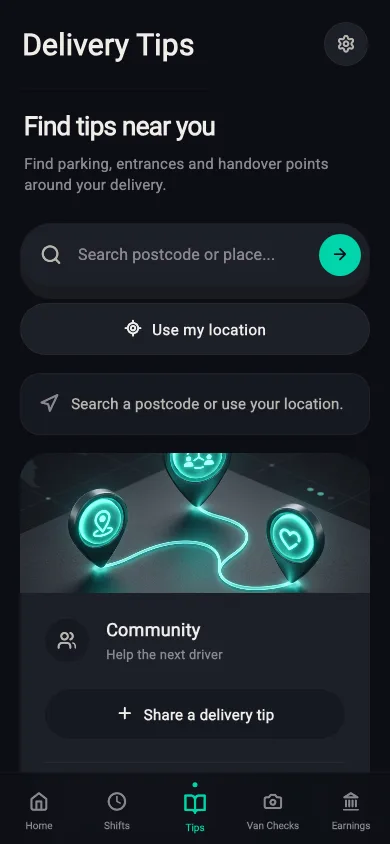

See the stop before you get there. Free on iPhone. Android coming soon.
Parking and loading
Loading is not parking. Double yellows ban waiting. You may be able to load or unload if there is no loading ban — look for yellow marks on the kerb — and you are not causing an obstruction. Read the plate. Move when the drop is done. Full rules: delivery driver parking rules.
Dark-evening safety
Late November it is dark by mid-afternoon. Highway Code: sidelights from sunset, headlights at night except on lit 30 mph streets, dipped in built-up areas, and do not dazzle people on the pavement. Walk like a pedestrian other drivers cannot see.
- Lights working before you leave the yard
- Dipped beam in town; no fog lights in clear weather
- Hi-vis on, torch on house numbers
- Open the door with the far hand so you look for cyclists
- Never reverse into a close you have not walked
What peak really pays
A fat block or a long round is not profit. Fuel, van rent, parking, time stuck at a gate — that comes off. Amazon Flex peak offers can look generous until you count hours in the dark and miles the platform does not pay.
Log hours, miles and costs on every shift. Then look at what is left. Work it on paper here: courier pay after costs.
Keep the till rolls. Fuel, parking, tolls, a phone mount — snap them the same day. What you can claim sits on self-employed courier expenses. Check HMRC guidance, or ask an accountant. This is not tax advice.
Proof on every drop
Peak is when missing-parcel messages land in January. Camera roll will have two thousand doorstep photos by then. Photograph the handover or the safe place, with time and date, and file it against that shift.
- POD on drops that need it — no “I’ll do it later”
- Van check still happens on a 200-stop day
- If they charge you, you need last Tuesday in two taps
How to fight a deduction: charged for a missing parcel.
After peak
Online Self Assessment for 2025–26 is due 31 January 2027 — five weeks after Christmas. Peak miles from November and December 2026 sit in the 2026–27 tax year. Keep both sets of records. Do not mix them.
- Export or photograph your mileage log
- Bag the receipts you still have on paper
- Match platform pay to what hit the bank
- File last year’s return if you owe one — 31 January does not move
Check HMRC Self Assessment deadlines, or ask an accountant.
FAQs
When is peak season for UK delivery drivers in 2026?
Treat peak as Black Friday 27 November 2026 through Christmas. Depots get busy earlier in November. The last week before Christmas is the hardest: more parcels, dark afternoons, and stops you have never seen.
Do Amazon Flex peak blocks pay more after fuel?
Peak blocks can look fat on the offer screen. Time in traffic, dark-evening walking, fuel and van costs still come off the top. Log hours, miles and costs on every block and check what is left. Rydealog is not Amazon Flex and does not supply jobs.
Can delivery drivers park on double yellow lines at peak?
Loading is not parking. Double yellows ban waiting; you may be able to load or unload if there is no loading ban (yellow marks on the kerb) and you are not causing an obstruction. Read the plate. Move as soon as the drop is done. See parking rules and the Highway Code.
What proof should I keep on a peak drop?
Photograph the handover or safe place on every drop that needs it, with time and date. File it against that shift, not in camera roll. If a missing-parcel deduction lands in January, you need last Tuesday’s photo in seconds.
Is Self Assessment due just after peak?
Online Self Assessment for the 2025–26 tax year is due 31 January 2027 — five weeks after Christmas. Peak miles from November and December 2026 sit in the 2026–27 year. Keep both sets of records. Check HMRC guidance, or ask an accountant.
Sources
Last checked 13 September 2026. Black Friday 2026 is Friday 27 November (Which?). Parking and loading: Highway Code rules 238–252 and road markings. Lights after dark: rules 113–116. Van checks: our DVSA-based checklist. Tax deadlines: Self Assessment deadlines. Daily food is not an allowable expense — see expenses if you’re self-employed. Guidance can change.
More from Rydealog
Guides for the rest of the job. Some pages are still being built.
Free on iPhone. Plan the next shift tonight.